(This is a slightly edited reply I put up to someone asking about "what I do" and why it is different from so many others. Enjoy!)
The biggest difference between everything I have seen is that I detach
myself from emotional investment in the characters. I care only that my
players act...I do not care what they do. I have tools at my disposal
(including the skill of improvisation I have worked very very hard to
develop) to generate content at will...and I have done the work to
create a world around them full of beings.
See, I don't make
adventures...my players, through their characters, seek them out...and
the adventures are adventures because they delve into the unknown. The
truly unknown. And they face the deadly. The truly deadly.
They
do not have the parachute of an assumption that they are
"protagonists"...because creating a fictional construct like that
actually removes their heroic qualities. Heroes are not heroes because
they are main characters...heroes are heroes because they overcome REAL
ODDS in the challenges they face. They take real risks. When one separates themselves from their character like a figure in a fiction,
you are robbing the player of real accomplishment because you have
stacked the deck in favor of the character...and because it is not the
PLAYER achieving these things, it is only the character because, again,
you have already assumed they will excel.
That is a real danger.
People play roleplaying games to accomplish meaningful things in an
environment where risk exists...studies have supported this time and
time again. Agency is what matters to players...they want their
decisions to matter in the context in which they are made. Undermining
that is very damaging to the core of play and it is insidious to
boot...it can be so hard to notice.
The biggest difference
between you and I, I suspect, is that I have done the work (either
currently or in the past) to support my players doing as they please
WITHOUT having to rely on them to content-generate. I do not need to use
collaboration as a clutch to lessen my work-load because, for me, that
work-load is minimal because of the skills I have developed...skills I'd
never need (and therefore not really develop) by relying on
aforementioned crutch. By doing that, it lets the players play only their characters
and this lets them actually achieve against the unknown. They risk in
real terms and they do so without the assumption that they are heroes in
some meta-sense. That concept robs them of their heroic nature. Being
heroic requires struggle...and struggle requires uncertainty. That
uncertainty, if it is to be meaningful beyond pleasant stories, is
required to be felt BY THE PLAYER not just by the character.
Foremost
though, this all requires a DM that is able to relinquish a large
amount of control. The funny part is, "partial collaboration" tells me
that DMs using that style probably aren't actually prepared to relinquish control. After all, partial
collaboration still gives the DM more narrative input than I myself have
at the table. When I DM I do not suggest things to the players and
anything that pops up does so with the understanding (as I have made
plain to my players) that it "is what it is"...I give up all my control
to the players to do as they please. I do not ask them for buy-in
because I have nothing to sell them...THEY are selling me on THEIR
actions...and I am buying anything they're selling.
This is
terrifying to many DMs because it relegates the DM to mere video game
console...you render the graphics and process the data. And boy is that a
scary notion. Having to get the hell out of the way and let players do
what they want without your say-so is absolutely horrifying to many
because...well surely it will be anarchy! You won't know what to do!
You'll screw up! Lose track! Be bad!
It's that fear that keeps
people in the little DM paradigm-box...or makes people flee it and warp
it into a different form of control...which, believe me, partial
collaboration is. It is a different form of control where the control is
consented to but, as I said, the DM still has more control than I do at
my table. So, all people can do, is assume a bad DM under my
style...because, of course, if I don't want them to do
something I will just make it unnecessarily hard or improbable...or make
it impossible all-together by some means. This is always what they
resort to claiming...they have to assume a bad DM because it is the only way they can see control in my style...and
they have a deep, visceral need to feel that control...because it is
what they would seek if they were in my position. So they look for an
"out" to make it inevitable that bad things would happen and control
would re-assert itself in the form of a DM behind the scenes. It is all
they know. The alternative is...frankly, scary to them.
The same
can be said for players. Players are so used to working along the old
garbage paradigm of "Go here, do this/follow plot, get reward" that
they've come to defend it...it is all they know. They claim to "like" it
but, of course, "like" is a spectrum starting at "barely tolerate out
of lack of options" all the way up to "orgasmic delight"...yet the hobby
dwindles constantly. If so many people like the paradigm, why is it
such a hard sell? Why is it losing out to MORE RESTRICTIVE mediums? The
answer is, of course, because those tables are just as restrictive but
it is felt even more pointedly because you are supposed to be able to do anything. Imagine that. ANYTHING.
When that illusion is shattered (as it is in countless groups) it is
very hard to get back. Even now, as I stated, I have veterans at my
tables just barely starting to grasp that they, through their
characters, really can shoot for the moon...that their destiny really is
in their hands...and that they will succeed or fail, not because I want
them to or because they are main characters, but because they succeeded
or failed.
Terrifying notion. Absolutely paralyzing in some situations.
After
all, these are people used to "go here, do that"...now it is "what do
you do?"...and that infinite choice potential can be
horrifying...especially initially when they think it is a trap and they
are still working under an illusion of "wrong & right" choices based
on what the DM has prepared.
The "what do you do?" however is
not asked to characters via their players...but to the players via their
characters. The characters have a big wide world in front of them rife
with adventure and danger...and the risks and rewards are real to
them....just as they are to the players because the construct is not one
that is standing on quicksand. They cannot change the reality of it at
will...they cannot enforce their player-will on it EXCEPT through their
avatars. Again...that can be scary. Even more so when one assumes an
emotionally invested DM.
Right now in one game the players are
working to convert a bunch of orcs to their side after chatting up an
orc-shaman prisoner...in an effort to form a small army and re-take a
captured, deserted town. And why are they doing this? Because I set it
up? Hell no. They are doing it because it is what their characters want
to do...and they are not doing that based on desires as a player that we
made manifest in the game...no, it is based on them roleplaying within
the construct. They do not know if they will succeed. All they know is
that it is possible...and it is possible because it is possible and either the dice or their own cleverness has made it so.
It's
a slight difference between "can do anything" and "could do
anything"...and that "could" makes all the difference. It is the
uncertainty of the hero and of adventure. It is the benefit of making
decisions constantly as a character in a world of fantasy rather than as
a guy at a table that got out of his 9-5 to play a game...the former
can have meaning to it and the latter is just a diversion. I will always
take the former. There are those, however, that will argue so heavily
that it is "just a game"...and sadly, they're right...for
themselves..because it will never be more with that attitude. Their
players will wander away and interest will dry up...stories will be
about funny events or what someone thought up...not about legitimate
personal investment and emotion. The pain of loss, for instance, is only
pain when it is actual loss...
Hell, ever get a party emotional
over the death of two orc NPCs? And the emotion was because it was how
things went...it was life...not something I decided...or that they
decided. It was all the unexpected highs & lows of life...because
that is what the game should reflect at it's best.
Like I said
though, that can be really scary...but we're supposed to be sitting down
to be heroic, right? So what's a little scare...?
Showing posts with label Theory. Show all posts
Showing posts with label Theory. Show all posts
Tuesday, April 30, 2013

Thursday, April 11, 2013
A reply about balance...
ABOUT BALANCE IN D&D...
Here's actually the problem... (and believe me, I know what I'm talking about)...
Want balance?
Rock, paper, scissor. That's balance.
This is also balance...
ROUND 1: FIGHT!
A mirror-match. Both players have the same options. Perfect & complete balance.
Balance could also be achieved in a game like Street Fighter (or at least as near as humans can perceive for balance) by having multiple characters all with the same reasonable ability to beat one another.
As this applies to D&D...is absolute bullshit.
See, the issue is, in something like Street Fighter, the game has ONE OBJECTIVE with a very rigid, systematic methodology for achieving it: use attacks to reduce your opponents life to zero.
This is not (repeat NOT) the case in D&D. Reducing HP to 0 is not the goal of D&D. D&D is not that simple of a game.
If every class is equally good at combat, that means that if a class is better in another aspect of the game then that class is IMBALANCED. Now, consider, that the game has infinite potential situations for classes/characters to engage in. Ergo, there are infinite opportunities for classes to be imbalanced. Therefore, obsessing over balance in the combat portion of D&D, is useless until the rest of the game is designed so as to support mechanical interaction so that it can be likewise balanced perfectly.
Otherwise the attempts to "balance" the classes are completely half-assed. Would it surprise me to know that the game has been undergoing half-assed design work for quite some time? Uhhhh...no not at all...
This is all <b>further</b> compounded by the fact that the average (vocal) game player is absolutely awful at mechanically playing games and even worse at recognizing what is (im)balance and what is their own suckiness.
Don't believe me? I've done QA for tabletop, card games, video games and board games. People are absolutely infantile when it comes to playing games. EVERYTHING that beats them is "broken". Anything they can't do is "unfair". And the whiners are the loudest.
Furthermore, they tend to myopically focus on one aspect of the game. In D&D's case, this is especially true as they zero in on combat and nothing else. This is further exacerbated by the build-methodology employed in the game design of, for instance, 3.0/3.5 where a class is less important than the component game options the class can choose from. That is why you can have an awful Fighter...and a competent one...or a useless Wizard or a competent one. And have it based ENTIRELY on decisions made to construct the character...the fact that the system allows characters to be built that do not even meet the systems own (asinine) combat design goals is proof of how over-designed it is.
Idiot players whined for more options, more choices and more power for their classes so that Fighters could equal Wizards without realizing that the <b>very concepts</b> used to make those classes mean that if a system is expanded and options are given the ONLY RESULT POSSIBLE is that the spell-casters will become more powerful. They were lucky that the designers were just as stupid as they were and listened to them...and the result was exactly what someone with half a brain for design would expect.
Then, this is YET AGAIN, compounded by the fact that many DMs run games like morons with no attempts at tactical acumen...and if they do, they get accused of being "unfair" and often back down. Wait...you mean if you leave the artillery untouched the ground troops will get obliterated? A BUH?!?
So, you have whining players demanding something that will only magnify the situation they are complaining about. They get what they claim they wanted...and when the "problem" arises even worse than before they take no responsibility for how they are running the game or any mitigating factors (like whining when someone is targeted "unfairly") and instead insist the game be "fixed" again. Hence we get 4th Edition which is, of course, all about "balance"...
And how did that end up going? Not so great...a game where the system intrudes on the reality of the game...where the logic of reality takes a back-seat to the system...and by design. And why? To pay homage to the unruly bitch "Balance". A system more combat focused than any other...and one where combat is boring and incredibly drawn-out.
Want proof that the designers don't know what they're doing with even basic progression-based game mechanics? How many iterations and revisions did Skill Challenges go through? I think the last count was (legitimately) 17 or so. Yyyyyeah...
Combat has been fetishized. It has become an obsession of the system. This has added complexity but no elegance to combat. This complexity will always magnify imbalances. This focus has dominated the game to the point where all balance decisions are being drawn against combat...which is stupid and short-sighted.
Instead of looking to the 99% of reality left untouched by sound game design (leaving that up to blogs like this one...) the combat system has been expanded, bolted-onto, revised, "improved", "streamlined", bloated, fondled and consecrated...because it is easy. Because it is all they know how to do...and, because it is almost all that is presented to players, it is all players are familiar with.
And they lose. Every time. They lose because all this combat is handled far better by video games that only become more sophisticated with every generation. It is a losing battle. The designers are Germany marching into Russia without winter clothes. Idiotic. Futile.
They lose because they are focusing, instead of on the game and it's strength, on a minor subset of the game that was NEVER going to run as well (or be as balanced) as could be possible because it's still all math being done by human beings oftentimes without even a table and minis to do so.
D&D design will be back on track when there's more about worlds and reality and less about new ways to poke with a sharp stick.
Don't hold your breath. In the meantime people like Alexis should carry on...the work there is good, worthwhile and useful to a DM running a WORLD...which is probably exactly why it will never be published by anything officially connected to D&D.
Wednesday, April 3, 2013
The bigger picture part 2.5...DMs Anonymous
So, when last we left, I told you how players need to approach the game. That was...uh...right around here I think. Go check it out.
Let's start at the top with this post...and let's start by me shattering an illusion.
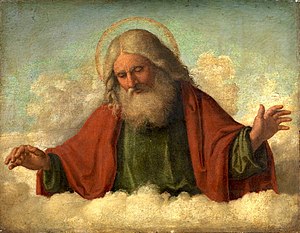
Many DMs see themselves as this...
And, if you think about it, it makes sense. You have ultimate power, you shape the world, you populate it...that means your God, right? No...you're this...

You see, the misunderstanding taking place is that the DM, at the table, is in an active role. On the contrary, one you sit down, you have to take on a passive role just like the NES. The game is loaded and the player picks up the control...at that point, you're supposed to act as nothing but the interface for the players. You are there for them to experience the world through. Remember, without a DM, there IS NO GAME because the players have no methodology to actually interact with the world.
Think about it...
What can the players do without the DM to validate action they take? At best, they can speak to one another...but they can't accomplish anything tangible in the world. They cannot shake, they cannot rattle, they cannot roll. It is this need for a DM that so many conflate with ultimate power. After all, this means the DM controls everything, right? No, the DM does not control the game any more than the NES system controls the game. Think about the controller...the controller of the video game system doesn't actually control the game. It is there as an interface for the PLAYER to make things happen in the game. Really, calling it a "controller" is a misnomer...it is just a convenient one.
Realize now that, without the players, no amount of design, effort or brilliance matters at all...it is the equivalent of a game console sitting, plugged in, turned on, with a game loaded...and no one to play it. The game cannot play itself. The NES cannot play the game.
That out of the way? We clear? You're not God. You're an interface.
Embrace this fact. Embrace it and realize how empowering it is!
When one gives up worrying about being God they give up worrying about being infallible. It also lets you get rid of the insidious little game-killer called "intent". You see, the NES doesn't have any intent when you are playing it. It's only job is to run the game as flawlessly as it can. ALL that it need do is not crash, freeze or glitch.The game does not care if you play the game according to it's vision. It does not care if you use the flute to skip levels 2-4...
And why should it care? The player is playing and that is a win! Remember, you should not desire that the players do certain things...you should simply desire THAT the players DO THINGS. After all, if they're using my awesome advice (wink wink) they will be undertaking great, grandiose goals. They will not have to rely on you to spoon-feed them content. You will merely have to sit down, present the world...and then get out of their way so they can play.
This is, of course, where many DMs fail. They assume that the effort and work that they put in to create the games content, that complete authority, should continue when they sit down at the table. Guess what? Help me out with this one, Lex Luthor...
If you never take to heart anything else I put up on this blog that is okay...as long as you accept the fact that the act of DMing, when done correctly, is one of letting go of attachments. You have to be totally Zen Jedi with your material. Accept this: When you have created something and placed it into the world YOUR ROLE HAS ENDED. Let your players and their actions (or the dice) determine how and what happens after that. Will that require adjudication? Will it require logical deduction? Will it require knowing what people will do in given situations? Will it require being self-aware enough to realize when you should leave it up to the dice because you can't be fair? YES YES YES, a thousand times YES!
The hardest part of all of that though is letting go. You have to let go and allow what will happen to happen. It means you have to give up the joy of seeing intent acted upon and instead embrace the joy of seeing others acting upon their intent to interact with what you present. The DM must be the least selfish person at the table. They must be the person that wants to have the least attention on them. To many DMs that is a completely foreign concept. This...is the hard part...
Consider that a DM acts, first and foremost, as a referee and judge. Tell me, are the referees in football, basketball, soccer, wrestling or anything else...the center of attention? Do the cameras focus on the ref? Do the commentators speak of the referees constantly? Is the judge at a trial the center of attention? Is the jury focused entirely on the judge? Do the attorneys speak primarily to the judge? The answer to all of those questions is obviously no. With a DM is should be no different. You are not the center of attention...the GAME IS. As discussed previously, what moves the game? The players!
You must be willing to fade into the background. The player does not think about the controller in their hands...the player does not consider the feelings or ambitions of the NES...the player does not care about these things nor should they. They are thinking about the content of the game...whether to attack...to flee...to choose to use an item. They discuss these options with other players...they debate...they argue. The NES shuts the hell up and lets them PLAY while doing it's best to make sure nothing goes wrong in the background.
The best part is, when you give up worrying about where the "story" will be twenty sessions from now, you free yourself up to make the game run as well as possible. You can make sure you know the rules. You can spend time fleshing out the players surroundings as they are NOW rather than as they must be in the future. After all, if you have no desires regarding the players actions there is no need for you to preordain what will happen. What will occur will occur.
Now, this post was originally supposed to be part 3 of this series...but I felt as if I needed to frame the mind-set a DM needs to have to succeed and to allow their players to thrive. Part 3 will be coming up soon.
Let's start at the top with this post...and let's start by me shattering an illusion.
Many DMs see themselves as this...
 |
| Complex?! Hell no! It's simple! |
And, if you think about it, it makes sense. You have ultimate power, you shape the world, you populate it...that means your God, right? No...you're this...

You see, the misunderstanding taking place is that the DM, at the table, is in an active role. On the contrary, one you sit down, you have to take on a passive role just like the NES. The game is loaded and the player picks up the control...at that point, you're supposed to act as nothing but the interface for the players. You are there for them to experience the world through. Remember, without a DM, there IS NO GAME because the players have no methodology to actually interact with the world.
Think about it...
What can the players do without the DM to validate action they take? At best, they can speak to one another...but they can't accomplish anything tangible in the world. They cannot shake, they cannot rattle, they cannot roll. It is this need for a DM that so many conflate with ultimate power. After all, this means the DM controls everything, right? No, the DM does not control the game any more than the NES system controls the game. Think about the controller...the controller of the video game system doesn't actually control the game. It is there as an interface for the PLAYER to make things happen in the game. Really, calling it a "controller" is a misnomer...it is just a convenient one.
Realize now that, without the players, no amount of design, effort or brilliance matters at all...it is the equivalent of a game console sitting, plugged in, turned on, with a game loaded...and no one to play it. The game cannot play itself. The NES cannot play the game.
That out of the way? We clear? You're not God. You're an interface.
 |
| Take the pill. It's good for you even if it's a bitter truth. |
When one gives up worrying about being God they give up worrying about being infallible. It also lets you get rid of the insidious little game-killer called "intent". You see, the NES doesn't have any intent when you are playing it. It's only job is to run the game as flawlessly as it can. ALL that it need do is not crash, freeze or glitch.The game does not care if you play the game according to it's vision. It does not care if you use the flute to skip levels 2-4...
 |
| Seriously, try this shit in some games and the DM will flip his wig! |
This is, of course, where many DMs fail. They assume that the effort and work that they put in to create the games content, that complete authority, should continue when they sit down at the table. Guess what? Help me out with this one, Lex Luthor...
 |
| Ahhh the only good part of this film... |
The hardest part of all of that though is letting go. You have to let go and allow what will happen to happen. It means you have to give up the joy of seeing intent acted upon and instead embrace the joy of seeing others acting upon their intent to interact with what you present. The DM must be the least selfish person at the table. They must be the person that wants to have the least attention on them. To many DMs that is a completely foreign concept. This...is the hard part...
Consider that a DM acts, first and foremost, as a referee and judge. Tell me, are the referees in football, basketball, soccer, wrestling or anything else...the center of attention? Do the cameras focus on the ref? Do the commentators speak of the referees constantly? Is the judge at a trial the center of attention? Is the jury focused entirely on the judge? Do the attorneys speak primarily to the judge? The answer to all of those questions is obviously no. With a DM is should be no different. You are not the center of attention...the GAME IS. As discussed previously, what moves the game? The players!
 |
| Learn from this duck! |
The best part is, when you give up worrying about where the "story" will be twenty sessions from now, you free yourself up to make the game run as well as possible. You can make sure you know the rules. You can spend time fleshing out the players surroundings as they are NOW rather than as they must be in the future. After all, if you have no desires regarding the players actions there is no need for you to preordain what will happen. What will occur will occur.
Now, this post was originally supposed to be part 3 of this series...but I felt as if I needed to frame the mind-set a DM needs to have to succeed and to allow their players to thrive. Part 3 will be coming up soon.
Friday, March 22, 2013
The bigger picture part 2...Poking & Winning, Flailing & Losing
Other than D&D, my great hobby passion is fighting games. Now, I love games in general, but fighting games have always been my favorite because of the beautiful simplicity of their design intent: reduce the other guys life to 0.
You'll notice how that utter, beautiful simplicity and the ease with which it is understood is just about the exact opposite of D&D which is not well understood, nor overly obvious in it's intent. Of course, I discussed that here. Feel free to read that and come back to this if you haven't read it already. Hell, read it again THEN come back here so it's fresh in your mind! Whatever, it's your time.
...
Okay back? Never left? Great. Let's move on.
So what you're going to find is that I draw from the simplicity of fighting game design to help explain and illuminate the more esoteric and mysterious (oooh) components of D&D. We're gonna dive into that to help frame how PCs interact with the world...how & why they fail to play D&D to win...and how they do just the opposite. First let's start with an important concept...
This is Vega. Otherwise known as Balrog. Otherwise known as "Claw" to the fighting game community. He is one of my all-time favorite fighting game characters (ugh except in SF4...awful) but that bit of trivia is neither here nor there.
See what he's doing in that picture? The stab? That's called a "poke". A "poke" is a fighting game term for quick attacks with good reach used to control space and peck at the opponent. It is similar, in many regards, to a jab in boxing because they both seek to control the other person and create openings for bigger hits.
What in the world does this have to do with D&D?
This is what you need to do as a D&D player. You need to poke and prod. You need to set up for the big "score" in the game. How do you do this?
Know your goals!
In a fighting game, a good player will poke to control their opponent to set up for bigger damage. Simultaneously, if the poke hits IT does damage as well SO (and this is the important part) you've just moved closer to your goal by working towards your goal.
Crazy right?
Great. Awesome. Stab the orcs like Vega. Reduce their HP to 0. Win! Right? Wrong, scrub.
That isn't the goal of D&D. Remember?
Reducing an orc to 0 HP is ONLY valuable when it helps you work towards your goals of progress & accumulation. Now, certainly, someone will say to me "But I got XPs and some GPs for killing the orc! The make for accumulation! I do good!" and I will say back to them "Time is your most valuable resource. You have to use it smarter to get more out of your game". If you are not using your time wisely you are not playing to win.
So...what do we do to play to win? Sensei Akuma, help me out here.
You poke.
You poke the world. Remember, the world is your playfield. IT is what you are playing in and against. NOT the DM. The DM is no different from your game system of choice. The DM is there to facilitate you interacting with the game world. He is there to spin the damn disc and load info.
How does one poke? Know your character. Know what your character wants and know how your character would generally default to getting it. Of course, this will require you to understand and give a damn about your characters personality, resources and skills but, hey, that's a given isn't it? Hope so, otherwise leave. (also, bit of a spoiler alert here...your character is you so if you don't give a damn...yeesh)
And the best part? A good DM should love when you poke well. They thrive on it.
Let's go with a classic example.
We've all seen the tired old Thief cliche of "I look around for whoever looks like they have the biggest coin purse. Imma pickpocket'em!"
Wow.
The best is how giddy the person always gets when they say that as if they've, somehow, hit upon the most brilliant get-rich-quick scheme EVAR!
Guess what the DM does at that point? They die a little on the inside. And why? Because it's the stupidest waste of time imaginable. Yes, oh yes, let us take from what little time we have to sit down and enjoy D&D to watch the Thief try and pick-pocket someone for a few gold. Wake me when it's over. At best, you hope for them to totally botch the roll so you can enliven the activity with some good ol' fashioned hijinks at the Thief tries to explain away what they were doing or evade capture. At best you're all laughing at the Thief (and nothing has really been accomplished) and at worst the Thief found some lint and wasted some time.
Oh jeez here comes that guy again...
"But, Yagami, I'm a Thief! I Thief stuff! You just told me to use my skillz (probably learned "in the mountains") and stuff to poke at the world to do good! So I go good, right?!"
I hate that guy. However, I'll answer him for the benefit of everyone else.
That is not a poke. That is a desperate flail. Now, they can look quite a bit alike! However, a poke is a tool of a player...the flail is the resort of the scrub. See, the scrub just throws out pokes, not because they are trying to accomplish anything, but because they think they are working towards their goal to mash their face against the buttons and throw out some attacks. There is nothing elegant about it. There is nothing smart about it. There is nothing about it that is trying to win. It is simply trying not to look like they are losing. After all, if the best you can think of as a Thief is to try and pick-pocket...well you'd be doing NOTHING if you don't pick-pocket, wouldn't you?! Can't do nothing! Nothing is worse than flailing! ...at least to the scrub.
Try this instead. Next time you play a Thief in a game, play as you normally do...watch things go on around you...maybe go shopping in the world...talk up some people. Y'know, usual stuff. Then, casually look up, smile at the DM and say "What's in high demand in the city? Trade-wise. What's hot?"
The reaction you get will depend strongly on your DM, their skill-set, their experience and their desire to facilitate playing to win.
Congratulations. You just poked.
Now, maybe the DM has NO IDEA...in which case, well they better get ready to come up with an answer or to allow you to find out. See, now you have a potential goal in mind. Now you have something to do. Perhaps the DM says "You aren't sure". Well time to go out and about and find out, isn't it? Definitely gives you some conversation besides the trite "So any rumors?" as you drink down ale in the boring ass tavern. Cuz those are so fun, right?
At this point, you'll note that you probably have the other players looking at you quizzically. After all, they were expecting your dumb ass to try and pick-pocket someone so they could get in a scuffle with town guards. God knows the Paladin player was relishing the opportunity to chastise you for those sticky fingers!
Give them an explanation. Something like "Look, we have a few options. If what's hot is being sent here...we go talk to the biggest importer. Find out what's giving him problem. Find out what'll help improve his profits. Then, we offer to make that happen...for a cut of those profits. Or...if it's being made here, we find out who's getting a cut. Someone's always getting a cut. Maybe we offer to reduce that cut...by eliminating the cutter. You catch me? That'd be worth a pretty penny to whoever is getting the pinch, right?"
Now the DM is whirling. His brain should be abuzz. After all, the fine silks that all the noblewomen in city have just been demanding their husbands purchase them have to get all the way here from South Whateverville and those trade routes are beset by bandits (or whatever). So...now the PCs can offer up assistance WITH a plan in place to profit from it all. Good for you, you've made a protection racket! Or, perhaps, the local winery would just love to be able to expand their business and ship out their profitable wines but they can't afford it because Whosit the Kerfluffle has been leaning on them hard to pay into them "else their vineyard might accidentally burn down one night". Either way, the DM has the start of an adventure and they didn't even have to have a hooded stranger sitting in the corner of the bar to give it to you as if you were a bunch of lazy dullards!
Heck, your fellow players should feel great too! They get to be proactive! They get to try to see something through to fruition! And, best of all, they get to do it on THEIR TERMS as a party instead of having to wait to fulfill something for someone else (that stupid guy in the hood, I mentioned)
No one likes that guy.
Thief gets money. Fighter busts heads. Paladin routs criminals. Cleric builds faith.
Win.
Of course, that's only step one. You just threw out a poke...then capitalize on it. Fights not over, buddy boy. It's just begun. The DM is going to poke back (hopefully) and you have a long road ahead of you.
This, naturally, applies to everyone in the group. Ask yourself as a player "How does what I'm about to do help my characters long term goals?"
If the answer is "Fuck if I know!" then you are doing it wrong. You want to win! You want to spend your time as wisely as possible! You want to be awesome! Doing things for reasons you can't discern will not help you with any of that.
If the answer is "Well it helps in this minor way...kinda" then you are doing it wrong. You are an adventurer! What you're going to do will almost certainly mean almost-but-not-quite-certain death! Are you going to risk your life, reputation and (as a player) time for something little? Hell no!
Oh dammit...here comes that guy from earlier in the post again...
"Hey, Yagami...my guy is Lawful Good. Doing good is it's own reward! I don't need bigger reasons!"
News flash. Your guy isn't Lawful Good then. He's Lazy Good.
Look at someone like Mother Theresa. She didn't sit around and help people that came to her or that she happened to notice or that walked by her. She went out, actively helped people, set up an organization to help people and worked herself to the bone. Agree or disagree with her, the woman was definitely productive.
Your LG Paladin should expect no less from themselves. Come up with a plan! Use your resources! Create new resources! Your allies are resources! Use them!
BEING GOOD IS NOT A GOAL IT'S A MOTIVATION! OUR MOTIVATIONS MOVE US TOWARDS GOALS! THEY ARE NOT GOALS IN AND OF THEMSELVES!
Maybe, for instance, you're a Cleric that believes in helping the weak and sick. Okay. Imagine that. Go ahead.
So...what do you do? Uh you get a quest from a shadowy figure in a hood to go do some vague good to get some XPs to...get stronger so hood-guy can ask you to do tougher stuff? Well doesn't that sound like you're fulfilling your goals? Bzzzt! Nope!
So...you look at your DM and say "Where in this city do the poor that are sick go?" and the DM looks at you and says "The alleys. To die away from their families so they don't make them sick." Wow. Never actually thought about the little people, did ya, Cleric-player?
Now that should give you a FIRE in your belly if your guy is really about helping the down-trodden.
Now you want to get out there and build a hospice for them. Somewhere your healing talents can really do some good! Right? I hope so!
Ooh that's gonna take more than faith though. That's gonna take money...
...
shit...
Wait!
Didn't the Thief say he had a way to make money?!
Here's the secret to the world. Money makes the world go 'round. Money gains you power. Power gains you money. GP and XP. XP and GP. You need to make it flow like water. YOU THE PLAYER. Not the DM. The DM is merely the system of pipes that deliver the water...you have to turn the handles and hold the glass. If you suck. If you're awesome, you steal a back-hoe, dig up the street, and tap into the main! Because that's playing to win.
Part 3 will address how a DM can make all this possible...and why they should.
You'll notice how that utter, beautiful simplicity and the ease with which it is understood is just about the exact opposite of D&D which is not well understood, nor overly obvious in it's intent. Of course, I discussed that here. Feel free to read that and come back to this if you haven't read it already. Hell, read it again THEN come back here so it's fresh in your mind! Whatever, it's your time.
...
Okay back? Never left? Great. Let's move on.
So what you're going to find is that I draw from the simplicity of fighting game design to help explain and illuminate the more esoteric and mysterious (oooh) components of D&D. We're gonna dive into that to help frame how PCs interact with the world...how & why they fail to play D&D to win...and how they do just the opposite. First let's start with an important concept...
 |
| High-level Assassin right here! |
See what he's doing in that picture? The stab? That's called a "poke". A "poke" is a fighting game term for quick attacks with good reach used to control space and peck at the opponent. It is similar, in many regards, to a jab in boxing because they both seek to control the other person and create openings for bigger hits.
What in the world does this have to do with D&D?
 |
| Stay with me, Burt! |
Know your goals!
In a fighting game, a good player will poke to control their opponent to set up for bigger damage. Simultaneously, if the poke hits IT does damage as well SO (and this is the important part) you've just moved closer to your goal by working towards your goal.
Crazy right?
Great. Awesome. Stab the orcs like Vega. Reduce their HP to 0. Win! Right? Wrong, scrub.
That isn't the goal of D&D. Remember?
Reducing an orc to 0 HP is ONLY valuable when it helps you work towards your goals of progress & accumulation. Now, certainly, someone will say to me "But I got XPs and some GPs for killing the orc! The make for accumulation! I do good!" and I will say back to them "Time is your most valuable resource. You have to use it smarter to get more out of your game". If you are not using your time wisely you are not playing to win.
So...what do we do to play to win? Sensei Akuma, help me out here.
 |
| Look at that sexy S.O.B. poke! Beautiful! |
You poke the world. Remember, the world is your playfield. IT is what you are playing in and against. NOT the DM. The DM is no different from your game system of choice. The DM is there to facilitate you interacting with the game world. He is there to spin the damn disc and load info.
How does one poke? Know your character. Know what your character wants and know how your character would generally default to getting it. Of course, this will require you to understand and give a damn about your characters personality, resources and skills but, hey, that's a given isn't it? Hope so, otherwise leave. (also, bit of a spoiler alert here...your character is you so if you don't give a damn...yeesh)
And the best part? A good DM should love when you poke well. They thrive on it.
Let's go with a classic example.
We've all seen the tired old Thief cliche of "I look around for whoever looks like they have the biggest coin purse. Imma pickpocket'em!"
Wow.
The best is how giddy the person always gets when they say that as if they've, somehow, hit upon the most brilliant get-rich-quick scheme EVAR!
 |
| Remember this guy? Yeah look out, Scrooge, we got another up & coming trillionaire |
Oh jeez here comes that guy again...
"But, Yagami, I'm a Thief! I Thief stuff! You just told me to use my skillz (probably learned "in the mountains") and stuff to poke at the world to do good! So I go good, right?!"
 |
| Stupid, Thief. That's how level 1's get executed for being idiots. |
I hate that guy. However, I'll answer him for the benefit of everyone else.
That is not a poke. That is a desperate flail. Now, they can look quite a bit alike! However, a poke is a tool of a player...the flail is the resort of the scrub. See, the scrub just throws out pokes, not because they are trying to accomplish anything, but because they think they are working towards their goal to mash their face against the buttons and throw out some attacks. There is nothing elegant about it. There is nothing smart about it. There is nothing about it that is trying to win. It is simply trying not to look like they are losing. After all, if the best you can think of as a Thief is to try and pick-pocket...well you'd be doing NOTHING if you don't pick-pocket, wouldn't you?! Can't do nothing! Nothing is worse than flailing! ...at least to the scrub.
Try this instead. Next time you play a Thief in a game, play as you normally do...watch things go on around you...maybe go shopping in the world...talk up some people. Y'know, usual stuff. Then, casually look up, smile at the DM and say "What's in high demand in the city? Trade-wise. What's hot?"
The reaction you get will depend strongly on your DM, their skill-set, their experience and their desire to facilitate playing to win.
Congratulations. You just poked.
Now, maybe the DM has NO IDEA...in which case, well they better get ready to come up with an answer or to allow you to find out. See, now you have a potential goal in mind. Now you have something to do. Perhaps the DM says "You aren't sure". Well time to go out and about and find out, isn't it? Definitely gives you some conversation besides the trite "So any rumors?" as you drink down ale in the boring ass tavern. Cuz those are so fun, right?
| You said it, Han ol' buddy |
At this point, you'll note that you probably have the other players looking at you quizzically. After all, they were expecting your dumb ass to try and pick-pocket someone so they could get in a scuffle with town guards. God knows the Paladin player was relishing the opportunity to chastise you for those sticky fingers!
Give them an explanation. Something like "Look, we have a few options. If what's hot is being sent here...we go talk to the biggest importer. Find out what's giving him problem. Find out what'll help improve his profits. Then, we offer to make that happen...for a cut of those profits. Or...if it's being made here, we find out who's getting a cut. Someone's always getting a cut. Maybe we offer to reduce that cut...by eliminating the cutter. You catch me? That'd be worth a pretty penny to whoever is getting the pinch, right?"
Now the DM is whirling. His brain should be abuzz. After all, the fine silks that all the noblewomen in city have just been demanding their husbands purchase them have to get all the way here from South Whateverville and those trade routes are beset by bandits (or whatever). So...now the PCs can offer up assistance WITH a plan in place to profit from it all. Good for you, you've made a protection racket! Or, perhaps, the local winery would just love to be able to expand their business and ship out their profitable wines but they can't afford it because Whosit the Kerfluffle has been leaning on them hard to pay into them "else their vineyard might accidentally burn down one night". Either way, the DM has the start of an adventure and they didn't even have to have a hooded stranger sitting in the corner of the bar to give it to you as if you were a bunch of lazy dullards!
Heck, your fellow players should feel great too! They get to be proactive! They get to try to see something through to fruition! And, best of all, they get to do it on THEIR TERMS as a party instead of having to wait to fulfill something for someone else (that stupid guy in the hood, I mentioned)
 |
| I have an overwrought, boring-ass quest for you! The world depends on it! Also, can you pick me up some smokes? |
Thief gets money. Fighter busts heads. Paladin routs criminals. Cleric builds faith.
Win.
Of course, that's only step one. You just threw out a poke...then capitalize on it. Fights not over, buddy boy. It's just begun. The DM is going to poke back (hopefully) and you have a long road ahead of you.
This, naturally, applies to everyone in the group. Ask yourself as a player "How does what I'm about to do help my characters long term goals?"
If the answer is "Fuck if I know!" then you are doing it wrong. You want to win! You want to spend your time as wisely as possible! You want to be awesome! Doing things for reasons you can't discern will not help you with any of that.
If the answer is "Well it helps in this minor way...kinda" then you are doing it wrong. You are an adventurer! What you're going to do will almost certainly mean almost-but-not-quite-certain death! Are you going to risk your life, reputation and (as a player) time for something little? Hell no!
 |
| High level advice, right here! |
Oh dammit...here comes that guy from earlier in the post again...
"Hey, Yagami...my guy is Lawful Good. Doing good is it's own reward! I don't need bigger reasons!"
News flash. Your guy isn't Lawful Good then. He's Lazy Good.
Look at someone like Mother Theresa. She didn't sit around and help people that came to her or that she happened to notice or that walked by her. She went out, actively helped people, set up an organization to help people and worked herself to the bone. Agree or disagree with her, the woman was definitely productive.
Your LG Paladin should expect no less from themselves. Come up with a plan! Use your resources! Create new resources! Your allies are resources! Use them!
BEING GOOD IS NOT A GOAL IT'S A MOTIVATION! OUR MOTIVATIONS MOVE US TOWARDS GOALS! THEY ARE NOT GOALS IN AND OF THEMSELVES!
Maybe, for instance, you're a Cleric that believes in helping the weak and sick. Okay. Imagine that. Go ahead.
 |
| Yyyyyes! Imagine it! |
 |
| Thought I said 'unfiltered'. Now you're gonna pay... |
Now that should give you a FIRE in your belly if your guy is really about helping the down-trodden.
Now you want to get out there and build a hospice for them. Somewhere your healing talents can really do some good! Right? I hope so!
Ooh that's gonna take more than faith though. That's gonna take money...
...
shit...
Wait!
Didn't the Thief say he had a way to make money?!
 |
| At this point the Thief should look like this. So should your DM if he's smart. |
Part 3 will address how a DM can make all this possible...and why they should.
Wednesday, March 20, 2013
The bigger picture... Part 1
 |
| Gonna be a good day! |
I've been giving thought recently to the title of this blog...playing to win. What does that mean in regards to D&D?
A lot of people struggle with that because they do not look at the mechanical side of D&D. They do not look at the nature of the game itself. Time and time again, I've been in discussions, on message boards or perusing blogs and seen that there is very little understanding about the goal of D&D. Why is this so? Probably because D&D is unlike most other games. There is so much one can do in D&D that it seems impossible to pin down an actual purpose to the game as designed. What we'll do first is dismiss the most common theory...
"The point of D&D is to have fun!"
Wrong. Inaccurate. Mistaken.
The problem with this statement is that it mistakes the ACT of playing Dungeons & Dragons with the play of Dungeons & Dragons.
Follow me? Probably not.
Separate the activity of sitting down with your friends and engaging in a game from the actual game itself. If it helps, consider a game like Call Of Duty.
 |
| Uhh...close enough... |
Imagine you are sitting with your friend, let's call him Anthony, and you are playing Call Of Duty with him against the computer. Someone comes up to you and says "Hey, why are you playing Call Of Duty?"
...
The answer is obvious right? "It's fun" Clearly, you are taking part in an activity with a friend because you both find it enjoyable. This is pretty much obvious.
Now, same scenario, but this time the person comes over and looks at the game, having never seen the likes of it, and says "What's the point of this game?"
Would you say "To have fun"? Of course not because you'd look like a moron.
You would answer with something like "To shoot all the bad guys" or something of the sort.
Now, realize that Dungeons & Dragons is no different except that far fewer people are familiar with the nature of a game like Dungeons & Dragons than with something like Call Of Duty.
The question "What is the point of Dungeons & Dragons?" could otherwise be stated as "What does the game expect from you?" or "What do you try to achieve in the game?" and this is all part of the design and structure of D&D as a game.
So, that brings us back to the top...
 |
| Oh god! My brain! |
...how can one understand how to play D&D to win when one doesn't understand what D&D as a game expects of them?
Well, all you need do is understand what the game is designed around: progress & acquisition.
Progress refers to forward momentum/movement/impetus. Characters move forward through events...they explore...they develop...the world expands. This is a core concept of the game and one that is important to understand both as a player and as a Dungeon Master. If you are stagnating or allowing your players to grow stagnant, the game is going to lose momentum and slow to a crawl or even stop. Ever notice how it's harder to keep a game going when one plays less often? Ever notice how an exceedingly fun campaign demands to be played more and more often? Momentum, my friends. The desire for progress. The players, via their characters, wish to DO more.
But what feeds progress? What creates that hunger for more?
 |
| Oh hai, acquisition! |
Experience points. What more need be said? You kill stuff, you get rewarded. You play the game, you slay some monsters, you get XP. Why? Because you are feeding the beast of acquisition! Whether it's by killing foes or finding treasure, getting rewarded Experience lets a player feed the desire to acquire while simultaneously helping them experience progress as their character gains levels and literal experience within the game milieu.
The game doesn't just stop there though because I mentioned gold right?
 |
| Scrooge McDuck enjoying the rewards of a lifetime of adventuring. Seriously, read his history...he's a bad ass! |
Scrooge McDuck is, as mentioned, a high level adventurer. Dunno what class he is...maybe a 17th level Miser? I dunno. 15th level Duck? 20th level Highlander? Whatever. But he earned his money. Now go read a comic with him in it or watch some episodes of Duck Tales and you'll notice a common theme with Scrooge; he counts his money constantly and will go to extreme lengths to get it back when it's missing. Why though? It's actually not simple greed because ANY money would do to replace what he's lost if it was simple greed. Instead, he wants back his money...because he earned it. EARNED IT. The money has sentimental value because Scrooge got it with his blood, sweat and tears.
Your players are no different. Should be no different.
Want to prove it? In a game session, have a thief steal some money (or some other possession...doesn't even have to be that monetarily valuable) from a player and run off. Then watch them pursue that guy as if he'd just taken their soul and insulted their mother. Hell, they'll even pass up OTHER MONEY to get back what is specifically theirs...and for no other reason than because it IS theirs. They earned it and feel entitled to it. They acquired it fair and square by the rules of the game.
Oh and isn't that telling? "By the rules of the game."
The players scrap and hunt and slay to get things...to have stories about getting those things...and to use those things to go kill more things to get more things to repeat the cycle again and again and again!
 |
| You said it, buddy! |
Kill things and take their shit.
Does it really boil down to just that? Yes and no. When looked at in the simplest terms it really can be just that...when you play in simple ways. We're not here to just talk about the simple ways to play though, are we? No, we want to play at a high level as both DMs and players. Or at least I hope you do if you're reading my craziness.
So we achieve in the game by progressing and acquiring. That gives us a basis for understanding! We have a goal in mind though!
But...how do we pursue it?
And, as DMs, how do we enable it?
And should we enable it?
Oh you absolutely should. You must. In doing so, however, you must not be a simple enabler. Remember, you are not there to make it easy, you are there to make it possible...but that is for part 3. Part 2 will discuss pursuing goals as a player...then part 3 will be about how DMs must put in the work to make it possible for players to do what I just told them to do in Part 2. You can thank me later.
Monday, March 4, 2013
I attack...I attack...I attack...
Wizards have too many options.
Fighters have too few options.
We've heard that again and again haven't we? If there was a movie trailer for 4th Edition the words "FIGHTERS" "GET" "MORE" "OPTIONS" would have flown at the audience from the screen at high speed accompanied by some pounding THX bass.
Aaaand...it's true and it isn't. It's true that fighters have typically lacked options in combat outside of swinging their sword (or hammer or whatever) again and again. Of course, in 3.0 they got plenty of options like Tripping and Overrunning and BlahBlah...except the options sucked unless you feat-invested in them. Then guess what your options became? I trip...I trip...I trip...
Wow. Brilliant design there guys.
Fighters are supposed to be the masters of combat. Instead, they usually end up being masters of gimmicks. Shitty gimmicks. Gimmicks that have their novelty wear off very quickly.
See, when you're a wizard, you get lots of neat toys. Do you pick spell A or spell B? Well depends on the situation or which one is better or or or... So many 'ors'. Because they have options that are worth half a damn. Imagine an Illusionist whose only spell was "Illusion A". That's it. That's their spell. So what do you do as that Illusionist? You spam your one thing. Congrats, you're a wizard-as-designed-by-fighter-theory. Even specialists Wizards like Illusionists don't work that way though. Nope, they get lots of neat options too and trade a little versatility for a good amount of power.
What does the fighter get that invests in making himself good at tripping? Well...they don't suck at tripping. After all, if you DON'T invest the feats and such, you do suck at tripping. So the fighter has to invest just to make themselves not suck at something in combat. Wow. The Wizard? Nope, if they specialize they just get better at something they're already built to do.
Now at this point, this seems like a generic fighter bitchfest right? Well it ain't. I don't mind fighters. I don't mind their options. Their options just need to not suck out of the box. When designing a fighter, however, one also has to respect that they are designed to be a beginners class...or at least a class with simple, elegant design.
That is my goal as I work on fighters as my base-line class for the system overhaul I'm doing.
And what have I done? I've started looking at their options. As I am wont to do, I've done that by comparing it to something I'm familiar with...fighting games. Things like Street Fighter. You see, in Street Fighter, the elegant/simple/beginner character is Ryu. Ryu has basic attacks like everyone else. Press a button, punch a face (I attack...). He can also avoid attacking and block to defend himself. That's the same as what anyone else can do. He also has options. He can throw a fireball (control space), he can throw a rising uppercut (gamble risk/reward for damage) and he can move with a spinning kick across the screen (create pressure). When someone sees these things in action their purpose is immediately clear on, at the very least, a visceral level if not an obvious level.
In truth, Ryu is straightforward because he embodies and excels at the basic premises of the game of Street Fighter. Damage your opponent, control their space, keep them from controlling your space, create advantageous situations, punish disadvantageous situations. Fighters must be the same. They must reflect the combat system of D&D and excel at it...but they must do so in straight-forward, obvious ways.
Here is an example of my work thus far on simplifying combat.
"Push Back [Use: Standard/Full] - The character makes a Combat Maneuver roll against a target. If successful, the target is moved back 5 feet. If the Attack Roll exceeds the foes AC by 5 or more, the character may choose to push back the target 10 feet instead. If the target is pushed back and the character has not used their Move Action this round, they can make this maneuver a Full Round action and move into any of the squares vacated by the target of this attack."
Push Back is one of only a handful of maneuvers that will be available in combat (again, streamlining!) and is pretty straight-forward. Player rolls, compares value and gets a result. In this case, the poor orc is moved back. If the player rolls well enough, the orc is moved back even further. If the player chooses to do so (and has the Move action left) they can reposition themselves as well. Easy to understand. Easy to use. Useful.
Someone pressuring your wizard? Push them back. Need to use a foe to plug a hole like, for instance, a door? Push them back. Need to line someone up to double team them? Push them back. By making it easy to understand and perform it means that players will attempt it. It makes combat more dynamic as people have the option to do more than just stand toe-to-toe with enemies and slug it out as if they were standing static in a Final Fantasy game.
Now where does our friend the fighter come into play if everyone can attempt this?
"Bull Rush/Take-down - At level 2 a Fighter never misses an opportunity to hurt a foe! When a fighter successfully performs a Push Back or Trip maneuver against a target, the fighter also deals damage to the target equal to half their normal damage. For example, if the fighter normally does 1d8+2 damage, they would roll damage normally and then halve it against any opponent they successfully Push Back or Trip."
Now why is this better design? It keeps things simple. The player already knows how to do damage. They already know what a combat maneuver is. This incorporates nothing new. Rather, it marries two things the player is already familiar with doing. It isn't one of the insipid Improved-style feats that keep players from provoking attacks of opportunity (heave ho! they're gone!) or engaging in a tripping war (god how stupid...). No, it just takes an option that is already pretty good...and makes it better.
Furthermore, it is sound because it lets the fighter continue doing one of their primary jobs (deal damage!) while still contributing in a different way. Now, of course, the damage is in half...but that is what makes the option one that involves an actual choice! Do I Push this orc to position him better but do less damage? Or do I just hit him and hope to kill him? That choice is far more palatable to a fighter than simply saying "Do I move or do I hit?" because there is still a damage component. It creates interesting choices.
It is thematic. It is useful. It is interesting. It is simple.
Thoughts?
Subscribe to:
Posts (Atom)